ChatGPT vs an AI Room Designer: Which One Keeps Your Actual Room?
ChatGPT can restyle a room photo, but windows move and sofas shrink. Here's when ChatGPT is enough, when a room designer is worth it, and how to check either.

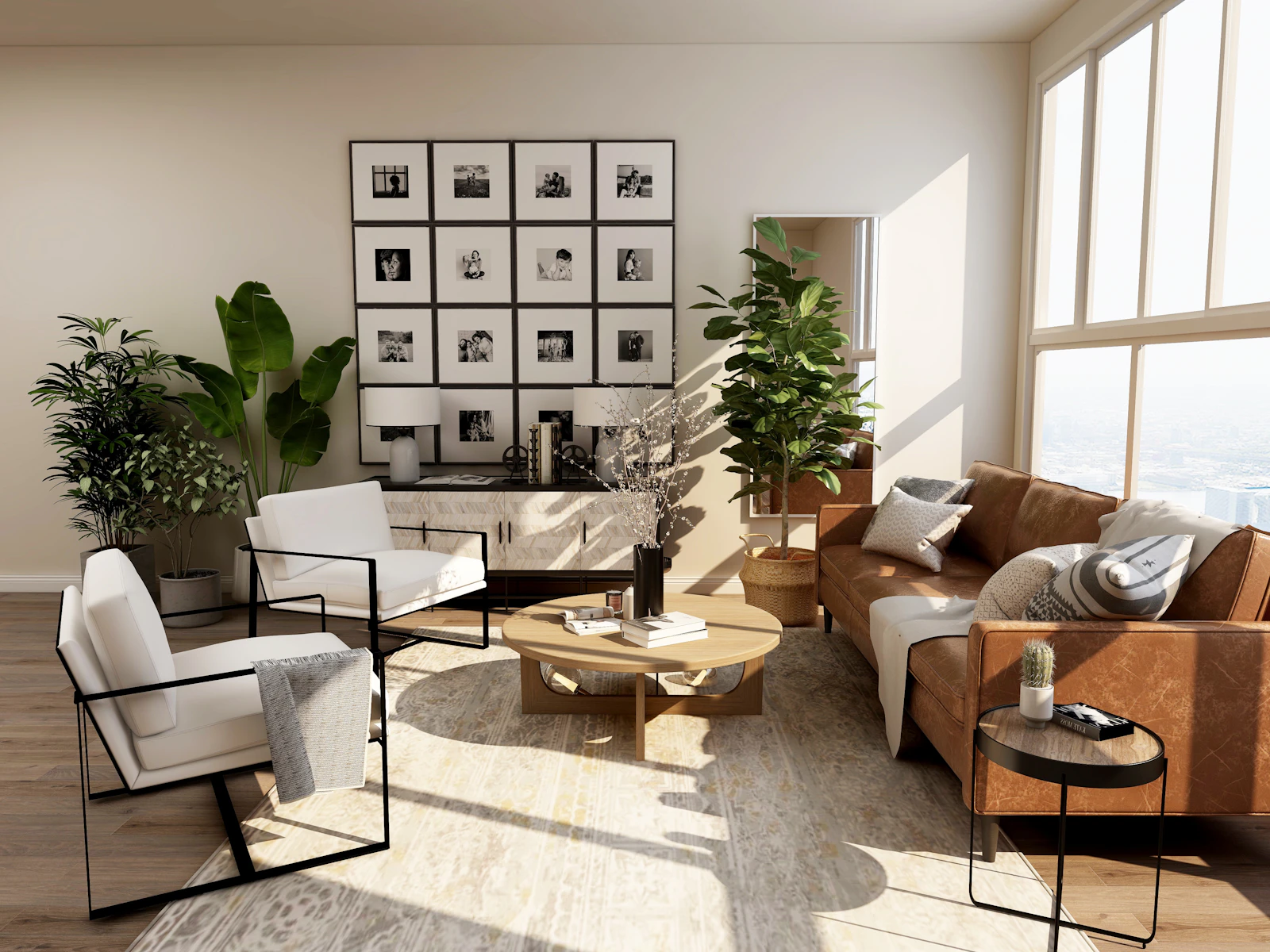
Most people’s first AI room redesign now happens in ChatGPT. You snap the living room, upload it, type “make this Japandi,” and a minute later there’s a lovely room on your screen. Then you look closer. The window has moved. The ceiling looks a foot taller. The sofa is somehow smaller than your coffee table.
That isn’t a bug in your prompt. It’s how general image models work, and it’s the main thing that separates ChatGPT from a tool built specifically for redesigning rooms.
I’m Daniel Htut, CEO of BasedFrame. We make one of those dedicated tools, so read this with that bias in mind. I’ll be straight about where ChatGPT is the better pick, because for a lot of jobs it is. Every price and rule below links to where it came from.
The short answer
Use ChatGPT for ideas: styles, palettes, shopping lists, layout options in words, and loose inspiration images. Use a dedicated AI room designer when you need a picture of your room, with the walls, windows and camera angle where they actually are, because you’re about to buy furniture, pick paint or put a photo in a listing.
Side-by-side comparison
| ChatGPT | Dedicated AI room designer (e.g. BasedFrame) | |
|---|---|---|
| Price to start | Free tier; Plus is $20 a month | BasedFrame: 30 free credits, then $49 a month for 180 credits |
| Image allowance | Not published; Plus limits “may vary based on system conditions” | Fixed price per render (2 credits for a room redesign) |
| Keeps walls, windows, camera angle | Not by design; often drifts | Built to keep them |
| Style control | Anything you can describe | 12 preset styles, reference photos, or free text |
| Targeted edits (one wall, one sofa) | Possible, but the whole image can change | Separate tools for paint, floors, furniture and point edits |
| Advice in words | Excellent | Limited |
| Best for | Brainstorming and planning | Previewing your real room before you spend |
What ChatGPT is genuinely good at
I’ll start here, because it’s easy to dismiss a chatbot for design and that would be a mistake.
It’s free to try. OpenAI’s help center says image creation is available on all ChatGPT tiers, free included, and you can upload an existing photo and describe the change you want. The Free tier FAQ notes that image creation has its own usage limit, separate from chat, so you’ll hit a wall after a few images, but it costs nothing to see what’s possible.
It’s a great design conversation. Ask why your room feels cold, what rug size works under a 7-foot sofa, or how to make a narrow room feel wider, and you’ll get a thoughtful answer in seconds. It can turn “I like calm, warm, a bit Scandinavian” into a named style, a palette and a shopping list. If you’re still working out what you like, our guide to 12 common interior design styles pairs well with that kind of chat.
It’s flexible. There’s no menu of presets. If you can describe it, it will try to draw it, which makes it a strong mood board generator.
Where ChatGPT falls down on your own room
The problem shows up when you want a preview rather than an idea. A general image model treats your photo as a reference, not a blueprint. It draws a new picture that looks like your room and matches your request, and a bigger, brighter room makes a nicer picture.
Reviewers who’ve tested this see the same failures again and again. Decor Copilot’s comparison lists windows and doors moving or changing size, rooms getting wider and deeper, furniture shrinking relative to the room, ceilings getting taller and flooring changing when you didn’t ask. Tigmi’s write-up adds two more: the camera angle shifts, and the light gets reinvented, so a north-facing room comes back looking like a sunlit loft.
None of that matters for inspiration. It matters a lot when you’re about to order an 84-inch sofa because it looked perfect in a render where the wall was secretly two feet longer.
There’s also the cost of iteration. OpenAI doesn’t publish a fixed image number for Plus. Its own help page says Plus usage limits “may vary based on system conditions”. That’s fine for casual use. It’s harder to plan around if you’re a designer or agent doing dozens of rooms a week.
Finally, privacy. ChatGPT’s pricing page lists whether content is used to train models as a plan-level setting, and the Plus help page says OpenAI may use conversations to improve its models unless you opt out. If you’re uploading a client’s home, check your data controls first.
What a dedicated room designer does differently
A tool built for rooms starts from a different assumption: the architecture is fixed and only the design changes. In BasedFrame’s Room Redesign, the walls, windows and camera angle are meant to stay exactly where they were photographed while the furniture, finishes and styling change. Style Transfer does the same with a reference photo you like, borrowing its palette and materials instead of its floor plan.
The other difference is that the job is split into smaller tools, so you can change one thing without regenerating the room:
- Walls & Paint changes only the walls, which is how we recommend testing paint colours before you buy a gallon.
- Furniture Swap drops a real product into your room from its product photo, which is the core of our room visualizer comparison.
- Point and Edit lets you click one spot, like the rug or the lamp, and describe the change.
Dedicated tools aren’t magic. No AI measures your room from a photo, and any render, including ours, can get a detail wrong. The difference is that keeping your room intact is the goal of the tool, rather than something you’re begging for in a prompt.
How to get better results from ChatGPT anyway
If ChatGPT is what you’ve got, these habits help a lot:
- Shoot a clean photo. Stand in a corner, hold the phone level and make sure every window, door and the floor line are fully in frame. Wide-angle distortion and cropped openings give the model less to work with.
- Say what must not change. Start with “Keep the walls, windows, doors, floor, ceiling and camera angle exactly as they are.” Repeat it in every follow-up.
- Change one thing at a time. “Now only change the sofa” drifts less than “make it more cosy.”
- Give real sizes. “Use an 84-inch sofa and a 48-inch coffee table” keeps scale closer to reality, as Decor Copilot suggests.
- Compare against the original. Put the two images side by side before you get attached.
The five-point check for any AI render
Whatever tool you use, run these checks before you spend money:
- Count the windows and doors. Same number, same place, same size?
- Check the ceiling. If the gap between the top of the window and the ceiling grew, the ceiling grew.
- Look for missing fixtures. Radiators, vents and outlets that vanished may sit exactly where the render put the sofa.
- Check scale against a known object. Dining tables are about 30 inches high and sofa seats usually 17 to 19 inches, per Decor Copilot’s checklist.
- Check the floor. If it changed and you’re not replacing it, mentally swap it back.
If you’re a real estate agent, the stakes are higher
A homeowner who trusts a drifted render ends up with a sofa that doesn’t fit. An agent who publishes one can mislead buyers. In California, Business and Professions Code section 10140.8, added by AB 723 and effective January 1, 2026, requires a disclosure on digitally altered listing images and a link to the original. Its definition explicitly covers images altered with artificial intelligence, including changes to furniture, flooring, walls, paint colour and views through windows.
MLSs are adding their own rules on top. CRMLS guidance asks agents to place the original image immediately before or after the altered one and label the edited version as “virtually staged” or “digitally altered.”
A label doesn’t fix a photo where the living room got two feet wider. For listings, use a tool that leaves the architecture alone, like Virtual Staging, and read our guide on where virtual staging becomes virtual renovation.
Which should you use?
- Pick ChatGPT if you’re exploring styles, want advice in words, or already pay for Plus and just need inspiration.
- Pick a dedicated room designer if you’re choosing furniture, paint or floors for a real room, preparing listing photos, or showing clients a design that has to match their space.
- Use both if you like: brainstorm in ChatGPT, then render the chosen direction on your actual photo.
If you want to see your own room restyled without the windows wandering off, try BasedFrame free. New accounts get 30 credits with no card, enough for about 15 room redesigns.
Sources
- OpenAI Help Center, What is ChatGPT Plus?
- OpenAI Help Center, Images in ChatGPT
- OpenAI Help Center, ChatGPT Free Tier FAQ
- OpenAI, ChatGPT plans and pricing
- Decor Copilot, ChatGPT vs AI Interior Design Apps: Why Rooms Change
- Tigmi, ChatGPT for Interior Design: What It Does Well, Where It Fails
- California Legislative Information, Business and Professions Code section 10140.8
- CRMLS, Digitally Altered Image Guidance and FAQs
Frequently asked questions
Can ChatGPT redesign my room from a photo?
Yes. OpenAI's help center says image creation is available on every ChatGPT tier, and you can upload a photo and describe the changes you want. The catch is that a general image model treats your photo as a reference rather than a fixed plan, so windows, doors, ceiling height and furniture scale often drift. It's great for ideas and less reliable as a preview of your real room.
Is ChatGPT Plus worth paying for just to design rooms?
Plus costs $20 a month, and OpenAI doesn't publish a fixed image allowance for it; its help page says limits may vary based on system conditions. If you already pay for Plus for other work, use it for brainstorming. If you only want to redesign rooms, a dedicated tool that's built to keep your walls and windows in place, with a free tier, is usually the better first stop.
Why does ChatGPT keep moving my windows and doors?
It generates a new picture that resembles your room and fits your request, and a bigger, brighter room makes a more attractive picture. Telling it to keep the walls, windows, doors, floor and camera angle exactly as they are helps, but it doesn't guarantee it. Always compare the result with the original photo before you trust it.
Can I use ChatGPT images in a real estate listing?
Be careful. In California, AB 723 has required since January 1, 2026 that agents disclose digitally altered listing images, including AI edits, and link to the original unaltered photo. An image where the windows moved or the room got bigger can misrepresent the property even with a label. For listings, use a tool that leaves the architecture alone and follow your MLS's labelling rules.
What should I check in any AI room render before I buy furniture?
Count the windows and doors and check they're in the same place. Compare the gap between the window tops and the ceiling. Look for vanished radiators, vents and outlets. Then check furniture scale against something you know, like a 30-inch dining table. Use the render for style and colour, and a tape measure for sizes.
How much does it cost to try BasedFrame?
New accounts get 30 free credits with no card. Room Redesign costs 2 credits per render, so that's about 15 whole-room redesigns, and quick edits like Walls & Paint or Point and Edit cost 1 credit. The Startup plan is $49 a month for 180 credits.
Try it yourself
Tools from this guide
 2 creditsRoom RedesignRestyle any room photo in a new design style.Open tool →
 3 creditsStyle TransferApply the look of a reference photo to your room.Open tool →
 1 creditWalls & PaintTry paint colours, wallpaper and panelling.Open tool →
 2 creditsFurniture SwapDrop a real product into your room from its photo.Open tool →
 1 creditPoint and EditClick a spot on any photo and say what should change there.Open tool →
 2 creditsVirtual StagingFurnish an empty room so buyers can picture living there.Open tool →
More from Resources
Keep reading
GuidesHow to Furnish a Small Apartment with AI Before You Buy a SofaThe average new studio is 460 sq ft. Here's how to photograph your small apartment, test layouts and furniture with AI, and buy pieces that actually fit.→
GuidesBefore You Spend $3,178 on Exterior Paint: 6 Visualizers ComparedColorSnap, Behr, Hover, Hardie Designer, real samples and AI compared: how to preview your house color before a $3,178 exterior paint job.→