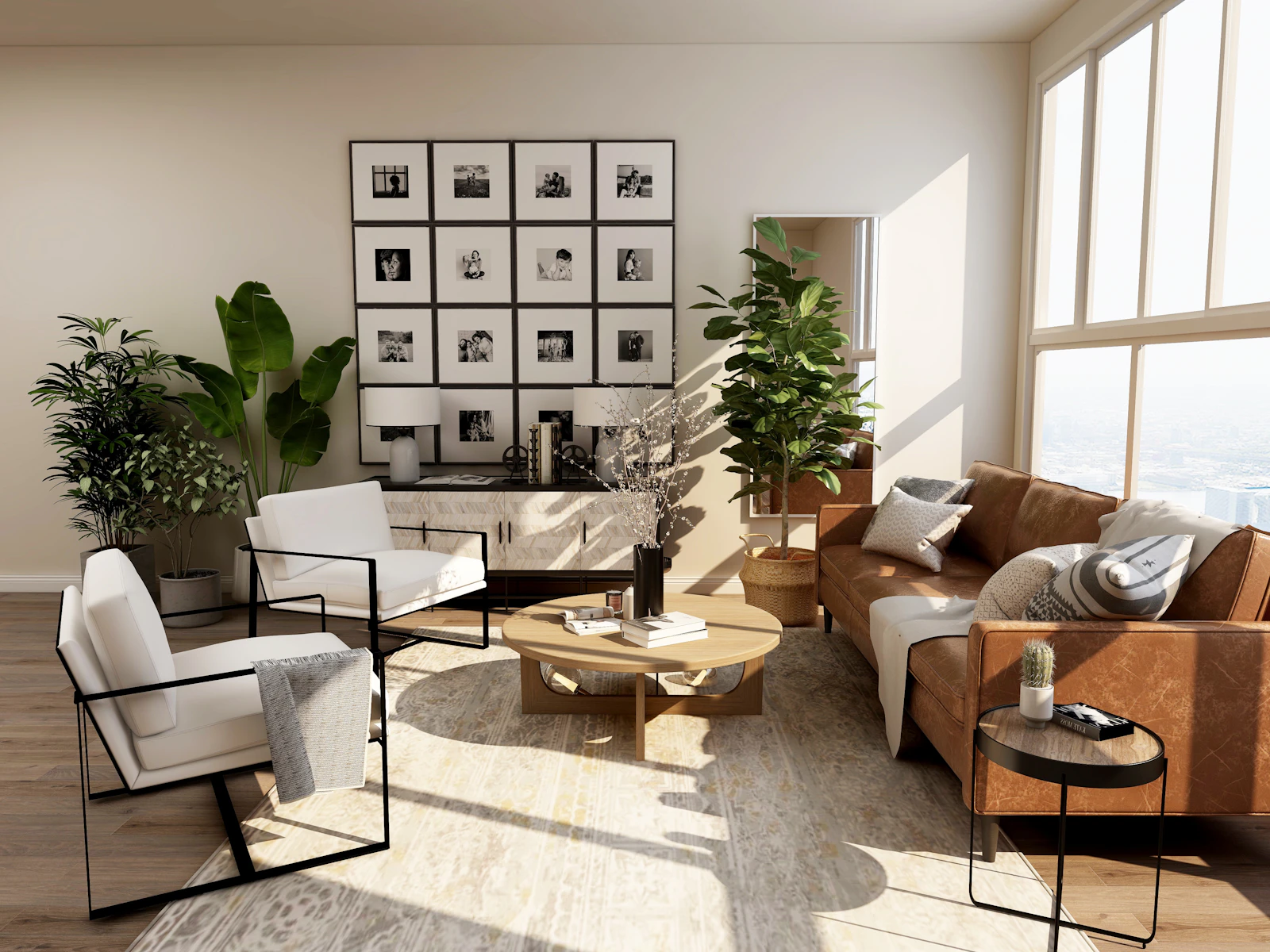
How to Redesign Your Bedroom with AI Before Spending $20,000
Step-by-step: photograph your bedroom, test paint, bedding, furniture and floors with AI, then check bed clearances and sleep basics before you buy anything.

Most people redesign a bedroom in the wrong order. They buy the bed first, then the rug, then a paint color that has to work around both, and a year later the room still doesn’t feel finished. Then they wonder whether it needs a “real” remodel.
A real remodel isn’t cheap. Angi’s 2026 data puts the national average bedroom remodel at $20,000, with most homeowners spending between $12,000 and $28,000 and projects reaching $40,000 for larger rooms with major changes. A lot of bedrooms don’t need that. They need a clear plan, and that’s the part AI makes cheap.
I’m Daniel Htut, CEO of BasedFrame. We build AI tools that redesign rooms from photos, so I’m biased. I’ll keep this practical: what AI is good for in a bedroom, where it stops being useful, and a process you can finish in an evening. Every number below links to where it came from.
What a bedroom project actually costs
Bedrooms are mostly cosmetic projects. There’s no plumbing or appliances unless you add an ensuite, so the gap between a refresh and a remodel is huge. Here’s how Angi breaks it down.
| Source | What it measures | Cost |
|---|---|---|
| Angi, 2026 | National average bedroom remodel | $20,000 average, $12,000 to $28,000 typical |
| Angi, 2026 | Full range, cosmetic to major | $3,500 to $40,000 |
| Angi, 2026 | 100 sq ft bedroom | $12,100 to $14,500 |
| Angi, 2026 | 150 sq ft primary bedroom | $18,000 to $22,000 |
| Angi, 2026 | 250 sq ft bedroom | $31,800 to $41,500 |
| Angi, 2026 | Hardwood flooring, 150 sq ft bedroom | $900 to $2,500 |
| Angi, 2026 | Building permits | $450 to $2,800 |
Angi also notes that general contractors charge around 20% to 25% of the project and electricians $40 to $140 an hour. On the low end, Angi’s bedroom renovation timeline guide says small cosmetic upgrades like paint or new window treatments can cost as little as $3,500, while structural changes or a new ensuite run $40,000 or more.
That spread is the whole argument for visualizing first. If new paint, bedding, lighting and a different bed wall get you a room you love, you’ve saved the difference. If the renders keep telling you the floor or the layout is the problem, you go into a contractor meeting knowing exactly why.
Step 1: Photograph the bedroom properly
AI works from your photo, so a better photo gives a more useful render.
- Shoot from the doorway or a corner. You want two or three walls, the bed and the window in one frame.
- Hold the phone level at chest height. Tilted shots make walls lean and confuse the model about where the floor ends.
- Turn on every light and open the curtains. Dark photos produce muddy renders.
- Make the bed and clear the floor. Clutter gets read as furniture and redesigned along with everything else.
- Take a second angle. One from the door and one from the far corner shows whether a design works from both sides.
If you need more help with this, our guide to taking real estate photos with a phone covers framing and light in more detail. The same rules apply to your own room.
Step 2: Test three or four whole-room directions
Start broad. Upload the photo to Room Redesign and render the same room in three or four styles, for example Japandi, warm minimal, mid-century and a softer traditional look. If you’re not sure what those names mean, our interior design styles guide explains each one.
Don’t pick a winner yet. Put the renders side by side and notice what you keep liking. Is it the low bed, the wood tones, the darker walls, the lack of stuff? Those repeated preferences are your actual brief. Most people find the answer is two or three changes, not a new room.
Step 3: Choose the wall color on your own photo
Paint is the cheapest big change in a bedroom, and the easiest to get wrong from a swatch. Use Walls & Paint to try your shortlist on the actual room, then test real samples on the wall in morning and evening light. Our guide to choosing paint colors with AI walks through that process step by step.
A word on “sleep colors”. The Sleep Foundation says little research directly connects bedroom color and sleep, though people tend to associate blue and green with calm. A 2013 Travelodge survey of 2,000 British homes found people with blue bedrooms reported the most sleep, 7 hours 52 minutes a night on average, and purple the least at 5 hours 56 minutes. That’s a hotel chain’s survey, not a sleep study, so treat it as a tie-breaker, not a rule. A color that makes you feel calm is the right one.
Step 4: Swap the furniture before you buy it
The bed is the biggest object in the room and the hardest to return. Use Furniture Swap to try a different bed, headboard, nightstands or dresser in your photo, and see how scale and color read against the walls you picked in step 3.
This is where AI saves the most money in a bedroom. A render will tell you quickly that a tall upholstered headboard swallows a small room, or that dark nightstands vanish against a dark wall. It won’t tell you whether the bed fits, which is why the next step exists.
Step 5: Check the layout with a tape measure
A render shows how a room could look, not whether you can walk around in it. Before you order anything bigger, measure against basic clearances.
| Clearance | Guideline | Source |
|---|---|---|
| Bed edge to wall | At least 24 inches | Lowe’s |
| Bed edge to a door that opens into the room | At least 36 inches | Lowe’s |
| Beside a queen bed | 24 to 30 inches each side | Homes & Gardens |
| Beside a king bed | 30 to 36 inches each side | Homes & Gardens |
| Foot of a queen bed to the opposite wall | 30 to 36 inches | Homes & Gardens |
| In front of hinged closet doors | 36 inches | Homes & Gardens |
The Lowe’s figures come from its furniture arrangement guide. The bed-size figures are interior designers quoted in Homes & Gardens’ bedroom clearance guide. They’re working rules, not building code. Our free furniture clearance guide lays out more of them by room.
Step 6: Design for sleep, not just for photos
A bedroom that looks great on Instagram can still sleep badly. The Sleep Foundation recommends a bedroom temperature of about 65°F, with most doctors suggesting 65 to 68°F, and advises keeping the room as dark as possible with dim, warm lamps before bed.
In practice that means three design decisions worth rendering: blackout curtains or blinds, warm bedside lamps instead of a bright ceiling fixture, and fewer screens. Try Relight to see the room under evening lamp light, not just daylight, because that’s how you’ll actually see it most nights.
It also means not overspending on decor while skimping on the bed. In the National Sleep Foundation’s bedroom poll of 1,500 Americans, 92% said a comfortable mattress was important to a good night’s sleep and 91% said the same about comfortable pillows. Budget accordingly.
Step 7: Decide on floors last
Flooring is the most expensive cosmetic change in most bedrooms, so make it the last decision. Use Flooring Swap to try wood, carpet or a big rug on your photo with your chosen walls and furniture already in place. Often a large rug gets you most of the effect for a fraction of Angi’s $900 to $2,500 for hardwood in a 150 square foot room.
What AI can and can’t do in a bedroom
| Decision | Can AI help? | What to do next |
|---|---|---|
| Overall style direction | Yes, this is the strongest use | Compare three or four styles on your own photo |
| Wall color | Yes | Test a physical sample in morning and evening light |
| Bed, headboard, nightstands | Yes, for look and scale | Measure clearances before you order |
| Bedding, rugs, curtains | Yes | Order fabric swatches where you can |
| Evening lighting mood | Yes | Choose warm, dimmable lamps |
| Flooring look | Yes | Order samples and calculate quantities |
| Moving walls, closets or adding an ensuite | Only to visualize | Talk to a contractor, budget for permits |
| Exact cost | No | Get itemized quotes |
If you’re weighing whether to hire a designer at all, our comparison of AI interior design vs hiring a designer covers what each one does well. And the same method works in the next room, as described in our living room redesign guide.
Try it on your own bedroom
If you want to try this tonight, create a free BasedFrame account. You get 30 free credits with no card, enough for several whole-room redesigns plus a stack of paint, lighting and flooring edits. If you use it a lot, pricing starts with the Startup plan at $49 a month for 180 credits.
Make the decisions on screen first. Changing a render takes a minute. Returning a king bed takes a week.
Sources
- Angi, How Much Does a Bedroom Remodel Cost? (2026 data), updated October 9, 2026 (national average, range, costs by size, flooring, permits, contractor and electrician rates).
- Angi, How Long Does It Take to Renovate a Bedroom? (cosmetic vs structural cost range).
- Sleep Foundation, What Color Helps You Sleep?, The Best Temperature for Sleep and Light and Sleep.
- National Sleep Foundation, Bedroom Poll summary of findings (1,500 telephone interviews with Americans aged 25 to 55).
- Travelodge, bedroom colour and sleep survey, May 2013, conducted with OnePoll across 2,000 British homes.
- Lowe’s, Furniture Arrangement Tips (bedroom clearances).
- Homes & Gardens, A guide to bedroom clearances, measurements, and spacing (clearances by bed size, closet doors).
Frequently asked questions
How much does a bedroom remodel cost in 2026?
Angi's 2026 data puts the national average at $20,000, with most homeowners spending $12,000 to $28,000 and a full range of $3,500 to $40,000. Size drives most of it: Angi estimates $18,000 to $22,000 for a 150 square foot primary bedroom. A cosmetic refresh with paint, lighting and soft furnishings costs far less than a remodel that moves walls or adds an ensuite.
Can AI redesign my bedroom from a phone photo?
Yes. Shoot from the doorway or a corner with the phone level at chest height, lights on and the bed made. Room Redesign keeps your walls, windows and camera angle and changes the furniture, bedding, finishes and decor, so you can compare several directions of the same room side by side.
What is the best bedroom color for sleep?
There's no proven winner. The Sleep Foundation says little research links wall color directly to sleep, though blue and green tend to carry calmer associations. A 2013 Travelodge survey of 2,000 British homes found people in blue bedrooms reported the most sleep, 7 hours 52 minutes on average, but that is a survey correlation, not a controlled study. Pick a color you find calming and test it on your own photo.
How much space should I leave around a bed?
Lowe's recommends at least 24 inches between the edge of the bed and a wall, and at least 36 inches between the bed and any door that opens into the room. For a queen, designers quoted by Homes & Gardens suggest 24 to 30 inches on each side and 30 to 36 inches at the foot. AI renders can't check this, so measure before you buy a bigger bed.
How much does it cost to try bedroom designs with BasedFrame?
Room Redesign and Furniture Swap cost 2 credits per render. Walls & Paint, Flooring Swap and Relight cost 1 credit each. New accounts get 30 free credits with no card, and the Startup plan is $49 a month for 180 credits.
Should I show AI bedroom renders to a contractor or designer?
Yes, as a reference rather than a spec. A render shows the look you want quickly, which cuts back-and-forth. Pair it with a written list of real products, paint codes and room dimensions so any quote is based on things that actually exist and actually fit.
Try it yourself
Tools from this guide
 2 creditsRoom RedesignRestyle any room photo in a new design style.Open tool →
 1 creditWalls & PaintTry paint colours, wallpaper and panelling.Open tool →
 2 creditsFurniture SwapDrop a real product into your room from its photo.Open tool →
 1 creditFlooring SwapPreview oak, terrazzo, tile or carpet underfoot.Open tool →
 1 creditRelightGolden hour, overcast or evening in one click.Open tool →
More from Resources
Keep reading
GuidesHow to Furnish a Small Apartment with AI Before You Buy a SofaThe average new studio is 460 sq ft. Here's how to photograph your small apartment, test layouts and furniture with AI, and buy pieces that actually fit.→
GuidesBefore You Spend $3,178 on Exterior Paint: 6 Visualizers ComparedColorSnap, Behr, Hover, Hardie Designer, real samples and AI compared: how to preview your house color before a $3,178 exterior paint job.→